
Paranormal Australia
Guide to paranormal investigation all across Australia
Guide to paranormal investigation all across Australia

Note: All images and tour guide information are copyright of their respective owners. If you see an image or content you would like taken down, please contact me and ill be happy to take it down.
Burra is a very historical township which was founded in 1845 after the discovery of copper in the area. It was this discovery of copper both here and in Kapunda that saved the new colony in South Australia from bankruptcy.
Several townships were set up in the area populated by largely the Cornish, English and Weslsh. However, housing was short for the growing population of nearly 5,000 people due to lack of materials so many of the miners and their families lived in dug-outs. These dug-outs stretched for 3kms along the Burra Burra Creek and was known as Creek Street. Eventually this method of living was abandoned due to the large amount of disease and flooding that occurred.
Instead seperate villages were set up including Redruth for the Cornish, Hampton for the English and Aberdeen for the Scots. Each village had it's own facilities and shops.
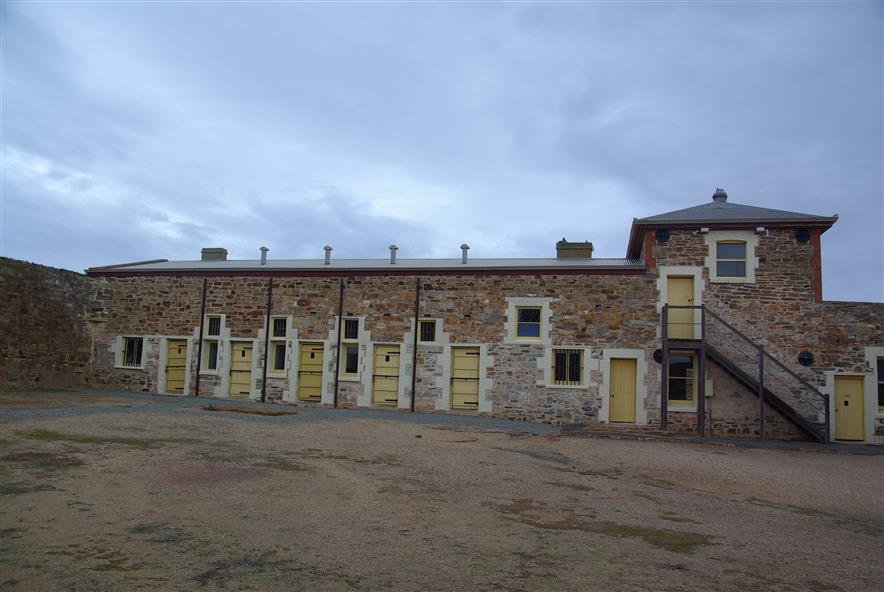
It was in Redruth that the first Gaol outside of Adelaide was built. It was originally built for lawbreakers as the transportation of prisoners to Adelaide was too expensive. Eventually though, it was shut down and made into a girl's reformatory.
Most of these towns still exist and are collectively known as Burra, however the township of Hampton is now only ruins after the last family left in the 1960's.
An evening meal at the Burra Hotel including 1 free glass of wine/beer or soft drink with your meal.Familiarising yourself with the equipment and it's uses.Going over examples of possible evidence.Splitting into teams and monitoring these venues for possible ghostly activity. Breakfast before you go home.

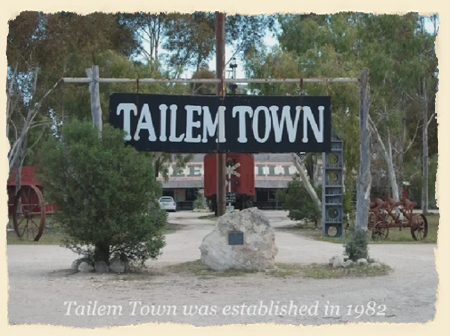
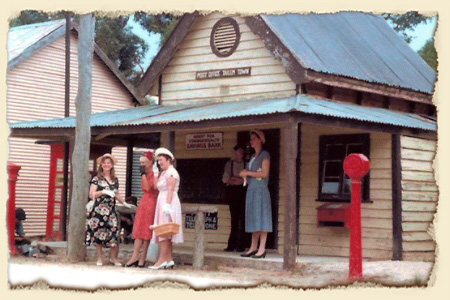
Old Tailem Town was first established in 1982 and has quickly grown to be the largest of it's kind in Australia. With over 110 buildings set out on 12 streets it certainly gives you a feel for what life must have been like for the early pioneers who settled here back in the 1800's. Life was certainly not easy and, children visiting today can only wonder at how their counterparts in the early days coped with such a basic life!
Each building has been carefully transported from it's original location and rebuilt in the Village, whilst painstakingly keeping the same appearance of what they were before their relocation. The majority of these buildings date back over 100 years and are filled with genuine artifacts that depict and give the feel of life a century ago.
The oldest building is the old ticketing office from the first exhibition grounds in Adelaide which dates from 1870 followed closely in age by the school that dates from 1881.


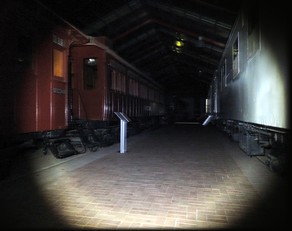
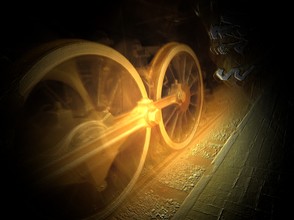
The National Railway Museum was originally part of the Port Adelaide Railway Station or Port Dock Railway Station as it was known back in its early days. Where the museum now sits was the good sheds and work area of the Station. The Station itself stood close by and used to be where the police headquarters is now located. The Port Dock was opened in 1856 and operated until 1981. It was the original line in South Australia.
The museum, originally at Mile End, was relocated to Port Adelaide and opened in 2001. It now holds an impressive collection of locomotives, carriages and the 19th Century original Goods Shed from the Port Dock Station site.
Why would a train museum be haunted and why would we want to go there? Well how about these five reasons for starters:
Join us on a hunt for the Port Adelaide National Railway Museum ghosts! The night includes a tour around the museum, learning about its ghostly tales before breaking for coffee/tea and listening to audio. We then break you into teams and, with equipment, take you off to explore the darkest recesses of this museum in the search of paranormal activity.

Torrens Island was first used by the Kaurna people pre white settlement and in fact only recently 70 of the Kaurna people have been reburied on the Island in an undisclosed location. The first settler to set up there was a gentleman by the name of Isaac Yeo, who established a dairy farm, the ruins of which still remain on the Island today. Isaac was asked to leave the Island once the Quarantine Station was proposed.
It was in 1850 that it was seen that there was a need for a working Quarantine site, especially after two ships arrived, the Trafalgar which carried Typhus and then the Taymouth Castle which carried smallpox. Until this time quarantine had taken the form of just anchoring ships in the gulf until the ‘all clear’ was given. Although there were records of a Quarantine camp on the Island in operation by 1855, a proper station wasn’t established there until around 1877-78. The station was around 551 acres and intended to accommodate 224 people. This Quarantine Station went on to protect South Australians from highly contagious diseases for almost 100 years.
In 1914 an internment camp or as it was called then, a concentration camp was established about 500 metres South of the Quarantine Station. It housed around 400 men of mainly German background. The site of the camp is thought to be now under the power station.
During it’s time the camp had a dubious history. At first it was run fairly and not harshly. However, once a new commander took charge, Capt Hawkes, conditions deteriorated rapidly until it was quietly closed in 1915 and the internees transferred to a more humanely run camp at Holsworthy. A complaint was put in about the treatment of the people under his command which included floggings and bayonet stabbings. He was finally dismissed in 1916 and the official records of the camp destroyed.
During its time in operation 10 deaths were recorded at the Quarantine Station. Four of these people died by 1896 and then in 1918 the troopship Boonah returned from South Africa with the Spanish flu and five of these soldiers died and were buried in the cemetery on the Island. One headstone remains a mystery as the name inscribed on it was found to have died in Launceston and not on the Island.
The last passenger was admitted in 1966 and the last disease of any concern was smallpox. However, after the extinction of this disease, which was declared in 1979, the Quarantine Station was closed to people in 1980. Parts of the Island continues to be used for animal quarantine which has been ongoing since 1879.


Formerly known as The Bishop's Palace, this magnificent mansion was built and completed in 1913 by Bishop John Henry Norton, Bishop to Port Augusta. He not only built this masion but he was also the architect of it so it is not suprising that Bishop Norton was particularly attached to his home. For this reason, after his death in 1923 at the age 67, it was thought that he remained there and still does to this day.
After his death his successor, Bishop Killain, refused to stay in this home and instead built another home just opposite. The now empty building was instead handed over to Mary Mackillop's Sisters of Joseph so that it could be used as a convent and boarding school for girls. The name was changed to St Joseph's Convent in 1926 and continued through as this until 1970. In 1980 a Melbourne Artist, Annette Barrette Frankel bought this property and renamed it St Cecilia after her patron saint. She gradually restored it and now uses it as a Heritage Hotel and also holds her own Murder, Mystery Nights there.
The haunted rumours started way back when Bishop Norton's successor took over. Despite having stayed in this home many times before, after a short time of living here, he quickly decided to build another Bishop's Palace opposite, refusing to stay any longer.
Since Annette opened it up as a Hotel, both guests and staff have experienced strange things. Guests often wake to find a short figure standing at their bed dressed in priests robes and witness strange hazy lights in their rooms. Reports are made of bedding being tugged at and hair being played with. Often people claim they have had to hide under their doona's until morning.
St Cecilia then came to the attention of Paranormal Field Investigators when Today/Tonight contacted them to see if they would help them on a story. A local newspaper had reported that the owner was selling up but anybody who wished to purchase this property would first have to stay the night to see if the Bishop approved. Although the night didn't reveal anything startling, further investigations revealed some unusual happenings, not least the night that trigger objects on a table started to move. More can be found on their website.
This is a whole night of investigation and includes a bed, 3 course dining, tea/coffee, full cooked English Breakfast and a night of entertainment.


